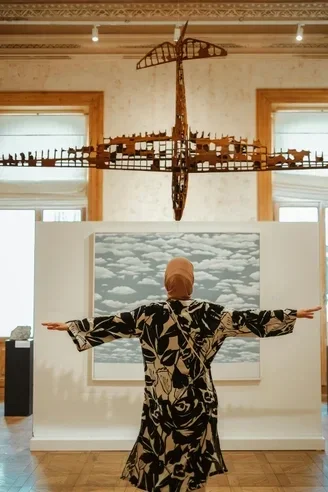
During a Museum Art In Focusing (MAIF) session or workshop, clients and group participants are invited to bring artwork representatives from museums to the studio, either physically or virtually. These can include visual art, art objects, or art installations. Participants can use flyers from local museums or photos they took during visits as references. Alternatively, participants can access virtual art on their smartphones or select art from books, catalogs, or the therapist's digital devices
Exploring art stemming from public environments, such as museums, enables participants to distance themselves from clinical themes. They learn that they are more than just their symptoms or problems. Another benefit of using Museum Art In Focusing is exploring one's tendency to conform to socioculturally formed mindsets
A MAIF session connects clients or group participants with museum art and with their sensory and emotional experiences of the artwork. Clients or participants alternate between receptive activities, such as observing the artwork through "slow looking," and expressive activities, such as drawing or movement. This combination fosters a deeper, more personal connection to the art and oneself
The MAIF process creates a transformative and meaningful experience by bridging the gap between professional artists' work and participants' situational Felt Sense of the 'More,' which exists beyond concepts and ideas. Consequently, working with museum art in the studio becomes a healing experience that allows participants to explore and restore their inner landscapes in a safe and contained setting
The MAIF approach is trauma-sensitive because it enables clients to explore their inner landscape without having to verbalize their traumatic experiences. Clients are not required to express themselves artistically firsthand. Furthermore, artwork from professional museums serves as a holding container. This artwork implicitly represents the client's inner theme. When clients are ready, they can shift from implicit to explicit meaning-making by creating their own artwork based on their Art Sense, or aesthetic Felt Sense
Once the therapeutic relationship has been established through sessions in the studio, the therapist and client or group participant can visit a local museum together. This museum visit serves as a transitional space where clients can practice moving from therapeutic studio work to promoting their own well-being in museum environments